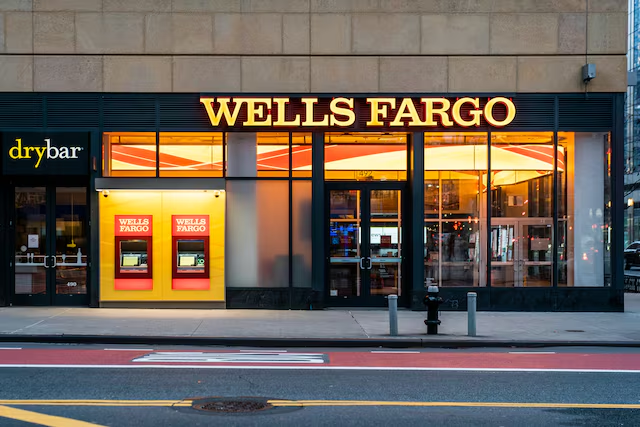
We offer USA physical bank accounts to simplify your financial transactions and help you manage money effortlessly. These accounts enable you to receive payments directly, whether for personal use or business purposes. With a secure system in place, you can ensure that your funds are always safe and easily accessible. Managing expenses, tracking income, and organizing your finances becomes straightforward with the tools provided. This service is tailored to provide convenience and efficiency for all your financial needs.
Our USA physical bank accounts also open doors to a variety of financial services designed to meet diverse requirements. From enabling smooth payment processes to offering advanced banking solutions, these accounts give you the flexibility to handle multiple financial tasks seamlessly. You can focus on achieving your business goals or managing your personal finances while relying on a trusted and reliable platform. Whether it’s accessing funds or utilizing financial tools, our accounts are built for your success.
Opening a US bank account offers numerous benefits for individuals and businesses. It allows you to securely receive and send payments, making financial transactions seamless and efficient. With access to international financial services, you can manage funds in multiple currencies and simplify global business operations. A US bank account also enables you to build a credit history in the United States, which can be valuable for future financial opportunities. Additionally, it provides access to advanced banking tools and ensures smooth online transactions, making it an ideal choice for managing both personal and professional finances.

Navigating personal finance can be challenging, but understanding the basics of a bank account is an essential step toward financial literacy. At E-commerce Linkers, we aim to provide clear and practical insights into managing finances effectively. Our comprehensive guide to bank accounts, crafted by industry experts, ensures that the information you receive is both accurate and applicable to your everyday needs. We cover the nuances of various bank account types, including checking and savings, emphasizing the benefits and considerations of each to help you make informed decisions aligned with your financial goals.
Our content is regularly updated to reflect the latest trends and changes in the banking sector, ensuring you get the most up-to-date advice. Whether you’re opening your first account or optimizing your existing financial portfolio, E-commerce Linkers’ guide is an invaluable resource. We understand the importance of trust and credibility in financial matters, which is why our articles are thoroughly researched and backed by authoritative sources. By focusing on clarity and practical utility, we empower you with the confidence to navigate your banking needs effectively.

Opening a physical bank account in the USA is a crucial step for managing your finances efficiently. Whether you are a resident, an international student, or new to the country, having a bank account ensures smooth financial transactions and provides access to essential banking services. This guide will walk you through the process of opening an account at popular banks like Chase Bank, Bank of America (BOA), PNC, Truist, and Wells Fargo, ensuring you navigate the process with ease.
Selecting the right bank is the foundation of a seamless banking experience. Popular banks such as Chase, BOA, PNC, Truist, and Wells Fargo offer distinct services tailored to various needs. Consider the following factors when making your choice:
For instance, Chase and BOA are known for their robust online services, while Wells Fargo boasts an extensive ATM network. Trust and PNC may offer attractive interest rates on deposits. Choose the bank that aligns with your financial priorities.
Every bank has a unique fee structure and offers varying benefits. Some key points to consider include:
Evaluate these factors to find the bank that best suits your financial habits.
Having the required documents ready will save time and prevent delays. Most banks in the USA require the following:
Reach out to the bank’s customer service to confirm their requirements and learn about the account opening process. Chase and Wells Fargo, for example, provide detailed instructions and support via their helplines or websites. This step can also help you schedule an appointment at your preferred branch.
With your documents ready, visit your chosen bank branch. While walk-ins are accepted, scheduling an appointment ensures a bank representative is available to assist you promptly.
At the branch, a representative will guide you through the account opening process. They will:
Ensure all the information you provide is accurate to avoid future complications.
Banks offer various types of accounts tailored to different needs. Some common options include:
Review the options available at your chosen bank, such as Chase’s student accounts or Wells Fargo’s savings plans, to pick the best fit.
After submitting your application, the bank will process it, which typically takes a few minutes. Once approved, you’ll receive:
If your chosen account requires an initial deposit, you can make it in cash, by check, or through a transfer. Some banks offer bonuses or incentives for larger deposits, so inquire about any promotional offers.
Before leaving the branch, ensure you understand the terms and conditions of your account. Key details to clarify include:
Set up online banking and mobile alerts to monitor your account activity and stay informed about balances and transactions.
Keeping your account in good standing is essential for long-term benefits. Avoid overdrafts, monitor your transactions, and ensure timely deposits to meet minimum balance requirements. Regularly reviewing your statements will help you manage your finances effectively.
Opening a physical bank account in the USA is a straightforward process when approached methodically. By selecting the right bank, preparing your documents, and understanding the requirements, you can ensure a smooth experience at Chase, BOA, PNC, Truist, or Wells Fargo. With your new account, you’ll enjoy secure financial management and access to a wide range of services. Happy banking!